
Author: RachelAlexander

OTT vs IPTV: Which is better for video streaming?OTT vs IPTV: Which is better for video streaming?
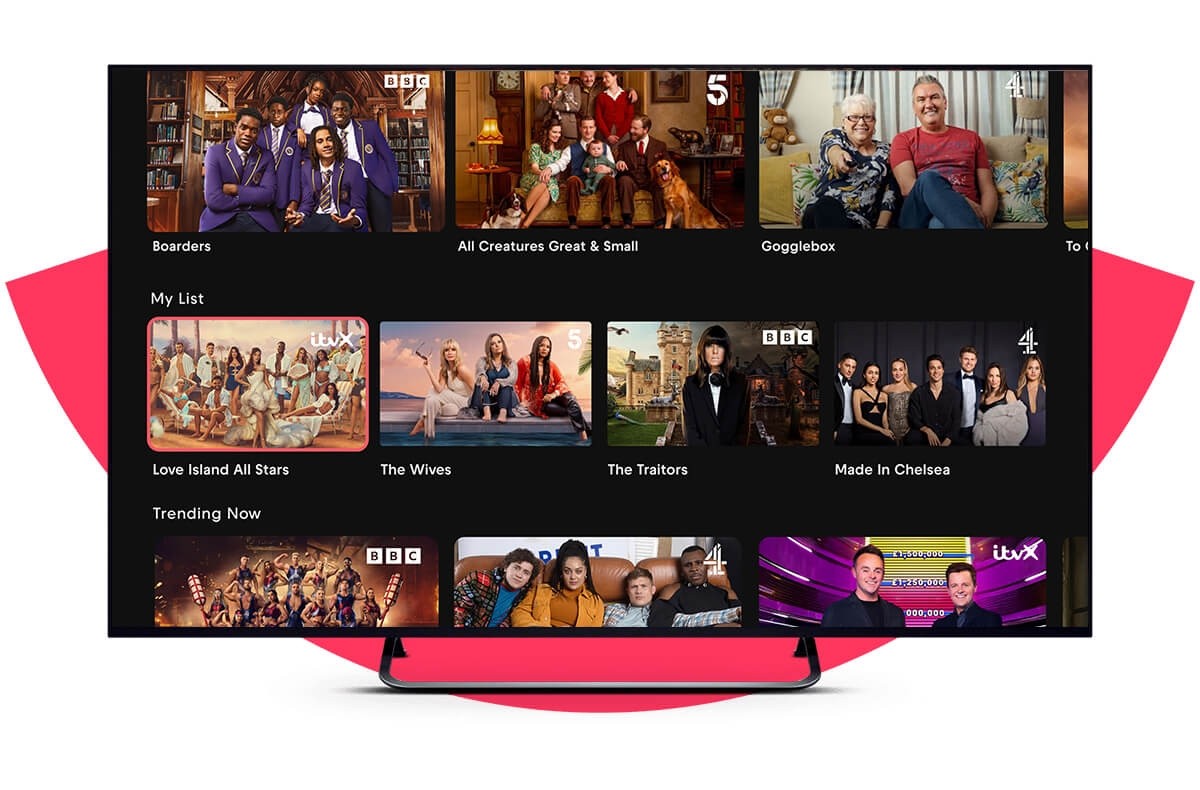
When it comes to internet streaming, the phrases "IPTV" and "OTT" are often used, presenting a problem for organizations looking for the best streaming option.

Consumers are embracing the freedom of on-demand programming as set TV schedules become obsolete.

Understanding the distinctions between IPTV and OTT becomes more crucial as we go through this transitional period. The worldwide OTT Video market is expected to reach a whopping US$295.40 billion by the end of 2023, with a 7.30% annual growth rate resulting in a market volume of US$420.10 billion by 2028 (Statista).

What is IPTV (internet protocol television)?

IPTV, or Internet Protocol Television, has evolved as a game-changing idea in the current entertainment industry, revolutionising the way we watch television programming.

To begin your IPTV firm on this digital TV journey, bear in mind that a fast internet connection is required for watching on-demand video material and live TV programs.

Delivering Content over IP Networks

IPTV UK, which is widely distributed by service providers, uses IP networks to deliver content, resulting in a personalised and adaptable watching experience. The range of IPTV capabilities is enormous, with the goal of meeting the diverse demands of a large audience.

Affordability and Various Subscription Models

One prominent feature of IPTV is its cost-effectiveness. In contrast to traditional cable subscriptions, IPTV providers provide a variety of subscription packages to appeal to a wide demographic.IPTV's flexible pricing structure, which offers both free services and monthly subscription alternatives, attracts budget-conscious customers seeking high-quality content without breaking the bank.

Complexities from a Broadcaster's Perspective

worldwide adds a layer of complication. Indeed, creating a storage mechanism for the vast number of accessible movies and designing a user-friendly online interface are required.

Furthermore, after a viewer has chosen a programme, video files are encoded into appropriate streaming formats and encrypted using Digital Rights Management. This vast backend provides users with a seamless and secure streaming experience, establishing IPTV as a multifaceted and technologically sophisticated solution in the digital entertainment world.

How does IPTV work?

Now that we've covered what IPTV is let's look at the complex workings that drive this kind of video distribution. IPTV relies on a simple but complicated principle: it uses the Internet Protocol's capabilities to deliver television programming via IP networks.

IPTV provides content in two basic formats: live television broadcasts and on-demand video streaming. Live TV shows are streamed in real-time, mimicking the traditional broadcasting method but with more flexibility.

On the other hand, IPTV's on-demand streaming feature enables customers to choose when and what they want to watch.
Unlike traditional television, which has inflexible timetables, IPTV allows consumers to cherry-pick programs and entertainment. This versatility stands out as a key feature in the broad popularity of IPTV services and solutions.

IPTV's Operations Overview

Now, let's see how IPTV works: The content is first compressed and encoded into a streaming-ready format. Once produced, the material is sent across IP networks to consumers via their broadband connection.

In addition, IPTV governs and regulates multicast traffic transmission using the Internet Group Management Protocol (IGMP).
This protocol enables effective content distribution by guaranteeing that each viewer gets the desired material without excessive data duplication.

Overall, IPTV's operational architecture combines technological intricacy with user-centric features to provide a flexible and customized television experience. As we continue our inquiry into IPTV vs. OTT, let us use our eyes and wits to discover more about OTT and how it works. Let's go!

What is over-the-top (OTT)?

But don't worry, there's no need for a cape—just a decent Internet connection.OTT enables customers to receive content directly over the Internet, bypassing traditional cable subscriptions. It's similar to having your favourite programming delivered to your house without the interruption of a cable expert.

Let us now break it down further. OTT essentially means going above and beyond traditional broadcast and cable providers to create a more liberated viewing experience. OTT platforms exist in a variety of formats, ranging from OTT streaming services, such as Netflix, to social networking sites that contain video content without a satellite connection.

Unlike IPTV, which uses specialised networks, OTT makes the most of existing infrastructure. This means you can watch your favourite films, TV series, or anything else on any Internet-connected device, such as your smart TV, desktop, laptop, tablet, or smartphone.


20 Best Facts To Picking Ai Stock Predictions Analysis Websites20 Best Facts To Picking Ai Stock Predictions Analysis Websites

Top 10 Tips On Assessing The Integration And Compatibility Of Ai Analysis Of Stocks And Predicting Trading Platforms
AI stock trading platforms that can predict and analyze stocks based on AI should be compatible with one another. An AI platform that is seamlessly integrated with your existing workflows and tools will improve efficiency and efficiency. Here are the top ten suggestions to assess compatibility and integration.

1. Check Brokerage Integration
The supported brokers are listed below. Make sure that the platform can be integrated with your brokerage or trading account.
Trade Execution: Verify whether the platform allows direct execution of trades by the broker integrated.
Account synchronization: Find out whether the platform is able to sync the balances of your account, positions and transaction history in real-time.
2. Examine API Availability
API access: Check whether the platform provides an API available to developers who are looking to automatize workflows or create custom tools.
API documentation: Make sure the documentation for the API includes clear examples and usage scenarios.
Limitations on rate. Verify that the API you are considering has reasonable limits on rate and is able to manage your volume of usage.
3. Assess the Third-Party Integration
Popular tools: Make sure that the platform is compatible with other tools such as Excel or Google Sheets.
Data import and export: Make sure the platform permits easy export and import of data into and out of other tools.
Extensions/Plugins: Make sure your platform supports extensions and plugins that can provide additional functionality.
4. Test Compatibility with Operating Systems
Desktop compatibility is essential. Make sure that your device works on the operating system you like (Windows MacOS Linux).
Mobile compatibility. Check if you can download the app using iOS or Android.
Web-based access: Verify whether the platform is accessible via a web browser for more flexibility.
5. Assess the Data Integration Capabilities
Data sources – Ensure that the platform can be connected to different sources of data (e.g. news feeds, market data, sentiments on social media).
Real-time data streams: Ensure that the platform can integrate real-time data streams for the most current analysis.
Historical data import: Determine whether the platform supports importing historical data to backtest or for analysis.
6. Testing of cloud and on-premise compatibility
Cloud-based platforms : the platform is accessible from any location with internet connectivity.
On-premises deployment: Make sure you know your platform supports on-premises deployment.
Hybrid models: Find out whether the platform is cloud-based and on-premise capabilities.
7. Check for Cross Platform Synchronization
Device synchronization – Make sure that your platform is synchronized to sync settings and information across all devices (desktops and mobiles).
Verify real-time updates to see if any changes made by one device will reflect immediately to the other.
Check the platform to see whether it permits data or functionality access even offline.
8. Examine the compatibility of trading Strategies
Algorithmic or automated trading: Verify that the trading platform supports these strategies.
Custom indicators: Find out whether you are allowed to utilize custom indicators or scripts.
Strategy backtesting: Determine whether the platform allows backtesting trading strategies with historical data.
9. Assess Security and Compliance
Data encryption: Make sure the platform has encryption in place for data during transit and in rest.
Validation: Find out if the platform has secure authentication methods, such as two-factor authentication.
Regulation compliance: Determine if the platform is compliant with applicable laws (e.g. GDPR, FINRA, SEC).
10. Test Scalability and Performance
Scalability: The platform must be able to handle growing data volumes and users.
Performance under load: Check whether the platform responds in high-volatility situations.
Resources used – Ensure that the platform efficiently uses system resources like CPU, memory or bandwidth.
Bonus Tips
Feedback from users: Read reviews and testimonials of users to determine the platform's capability to integrate.
Free trial: You can avail a demo or a no-cost trial to determine the platform's compatibility with your existing workflows and tools.
Customer support: Ensure your platform has a robust support for integration-related problems.
These tips will help you determine the compatibility and integration capabilities of AI stock-predicting/analyzing trading platforms. This will help ensure that they work seamlessly with your current platforms and boost your trading efficiency. See the top ai for investing for more recommendations including ai stock market, trading ai, ai investment app, ai for investing, ai chart analysis, ai stock trading bot free, ai investment app, investment ai, ai investing platform, best ai stock trading bot free and more.

Top 10 Ways To Evaluate The Maintenance And Updates Of Ai Stock Trading Platforms
The regular updates and maintenance of AI stock prediction and trading platforms are critical for ensuring they remain safe, efficient, and in alignment with the ever-changing market conditions. Here are 10 top tips for evaluating their updating and maintenance practices.

1. Updates are made regularly
Tips: Make sure you know how frequently the platform releases updates (e.g., weekly, monthly, quarterly).
Why are regular updates an indication of active development, and a responsiveness to changes in the market.
2. Transparency of Release Notes
Review the platform release notes to see the improvements or changes being made.
Release notes that are transparent demonstrate the platform's dedication to continual improvement.
3. AI Model Retraining Schedule
Tips: Find out how often the AI models are retrained with new data.
Why: Markets evolve, and models have to change to ensure accuracy and relevance.
4. Fixes for bugs and issue resolution
Tip: See how quickly the platform fixes glitches or any other technical problems.
The reason: Bug fixes are made in the shortest time possible to make sure that the platform remains robust and efficient.
5. Updates on Security
TIP: Make sure that the platform frequently updates its security protocols in order to protect user data and trading activities.
Cybersecurity is crucial in financial platforms to prevent breaches and fraud.
6. New Features Integration
TIP: Find out whether there are any new features added by the platform (e.g. advanced analytics or data sources, etc.) in response to user feedback or market trends.
Why are feature updates important? They show the company's ability to innovate and respond to customer needs.
7. Backward Compatibility
TIP: Ensure that the updates do not interfere with existing functionalities or require significant reconfiguration.
Why: Backward compatibility allows for a smooth transition.
8. Communication between Users and Maintenance Workers
TIP: Assess how the platform communicates scheduled maintenance or downtime to the users.
What is the reason? Clear communication prevents interruptions and increases confidence.
9. Performance Monitoring and Optimization
Tip: Verify that the platform constantly monitors the performance metrics like accuracy or latency and then improves their platforms.
Why: Continuous optimization is necessary to ensure the platform's efficiency.
10. Conformity to Regulatory Changes
Tip: Assess whether the platform is updating its features and policies to be in compliance with the latest financial regulations or data privacy laws.
Why is it important to follow the rules to reduce legal liabilities and to maintain the trust of users.
Bonus Tip User Feedback Incorporated
Find out if the platform incorporates feedback from its users in the maintenance and update process. This shows a customer-centric approach to improvement.
By evaluating all of these factors, it is possible to determine if you are sure that the AI stock trading platform you select has been maintained properly. It must also be updated and adaptable to market changes. View the recommended ai stock trader for website tips including ai stock predictions, best ai trading platform, ai stock price prediction, stock trading ai, free ai stock picker, invest ai, best ai stock prediction, best ai stock prediction, best stock prediction website, ai trading tool and more.

The Midriff Bar And Dad Room A Perfect Jazz BandThe Midriff Bar And Dad Room A Perfect Jazz Band

Every home has its specialised corners where memories are made. The midriff bar and dad room are two such spaces that hold a unusual . These areas often become the heart of crime syndicate gatherings, rest, and personal retreats. Let s research why these spaces are so earthshaking and how to make the most of them. 호빠알바.

What Is a Middle Bar?

A middle bar is a snappy and utility summation to any home. It s usually placed in a telephone exchange location, like the living room or dining area, qualification it well available for everyone. Here s why a midsection bar is a important idea:

  • Entertainment Hub: It s the perfect spot for hosting guests and serving drinks.
  • Space-Saver: Unlike a full-sized bar, a midriff bar doesn t take up too much room.
  • Aesthetic Appeal: A well-designed bar can heighten the look of your home.

Designing the Perfect Middle Bar

Creating a midriff bar requires serious preparation. Here are some tips to plan one that fits your title:

  • Choose the Right Location: Pick a spot that s central yet doesn t obturate movement.
  • Select Quality Materials: Use long-wearing and easy-to-clean materials like wood or marble.
  • Add Personal Touches: Decorate with glasswork, coasters, or a mini-fridge for .

The Dad Room: A Personal Sanctuary

The dad room is a dedicated quad where fathers can unroll, pursue hobbies, or simply some hush time. This room is all about console and functionality. Here s why every home should have one:

  • Relaxation: A target to scat the hustle and hustle of life.
  • Hobby Space: Perfect for hobbies like recital, gaming, or crafting.
  • Bonding Area: Kids and mob members can join for quality time.

How to Create the Ultimate Dad Room

Designing a dad room depends on personal preferences, but here are some universal proposition ideas:

  • Comfortable Seating: A lounger or a cozy frame is a must.
  • Entertainment Options: Include a TV, gaming comfort, or bookshelf.
  • Storage Solutions: Keep the room unionised with shelves or cabinets.

Combining the Middle Bar and Dad Room

When these two spaces are conjunctive, they produce a moral force area for ease and fun. Imagine a dad room with a moderate bar corner saint for hosting friends or enjoying a drink after a long day. Here s how to intermingle them seamlessly:

  • Shared Space: Use a divider or open layout to the two areas.
  • Coordinated Decor: Match the bar s title with the dad room s subject.
  • Practical Layout: Ensure there s enough room for front and activities.

The midriff bar and dad room are more than just spaces they re reflections of personality and modus vivendi. By designing them thoughtfully, you can make a home that s both usefulness and attractive.

Host Bars A Coup D’oeil Into Nihon’s NightlifeHost Bars A Coup D’oeil Into Nihon’s Nightlife

Host bars are a unique and bewitching panorama of Japan’s nightlife, offering a intermix of amusement, companionship, and opulence. These establishments, primarily base in districts like Tokyo’s Kabukicho, to women who seek care, , and a to unwind in an upscale setting. Host bars have full-grown into a multi-billion-yen manufacture, with hosts often becoming topical anesthetic celebrities.

What Is a Host Bar?

A host bar is a type of nightclub where male hosts think about female clients. Unlike traditional bars, the primary feather focalise is on providing personalized aid, flattery, and engaging conversation. Hosts are typically young, attractive, and attractive men who excel in qualification their guests feel specialised. Clients pay for the hosts’ time, often ordering expensive drinks and snacks to show taste.

  • Hosts are trained in conversation and .
  • Guests pay by the hour or through drink purchases.
  • Some hosts earn millions of yen each month.

The Role of a Host

Hosts are more than just bartenders or servers; they are performers who create an semblance of woo and exclusivity. Their job is to listen, compliment, and think of their guests, making them feel valuable. Many hosts train flag-waving clienteles, with some women outlay thousands of dollars in a I Nox to procure their favorite host’s aid.

  • Hosts often think of subjective inside information about habitue clients.
  • They may follow guests to dinners or events outside the bar.
  • Competition among hosts can be fierce.

The Host Bar Experience

Walking into a host bar feels like entry a glamorous worldly concern. The interiors are richly inlaid, with plush seating, twinkle chandeliers, and a lively standard atmosphere. Guests are greeted by hosts who see them to their tables, where they can enjoy drinks and . The see is studied to make women feel like royal house, even if only for a few hours.

  • Some bars volunteer themed nights or specialised events.
  • Guests can call for specific hosts.
  • Private suite are available for higher-paying clients.

The Dark Side of Host Bars

While host bars may seem glamourous, they also have a darker side. The manufacture is known for its high-pressure sales maneuver, with some hosts supportive clients to pass beyond their substance. There have been reports of women going into debt to exert relationships with their favourite hosts. Additionally, the aggressive can lead to exploitation and mental wellness issues for both hosts and clients.

  • Some hosts face extremum work hours and strain.
  • Clients may prepare unhealthy emotional dependencies.
  • The industry has been connected to organised in some cases.

Why Host Bars Remain Popular

Despite the potential downsides, host bars uphold to fly high because they fulfill a social need. Many women travel to these bars to turn tail the pressures of daily life, companionship, or undergo a fantasize worldly concern where they are the focus on of care. For some, it s a form of empowerment in a society where traditional sex roles still prevail.

  • Host bars offer a sagaciousness-free quad for self-expression.
  • They cater a feel of belonging for solitary individuals.
  • The industry adapts to dynamical societal trends.

Host bars are a and intriguing part of Japanese culture, blending amusement, luxuriousness, and human being . While they offer an head for the hills for many, they also spotlight deeper social group issues. Whether seen as exciting or problematical, 호빠알바 undeniably hold a unique point in Japan’s night life.

1 On 1  Marketing : The Secret Gun For Personalized Client Wedding1 On 1  Marketing : The Secret Gun For Personalized Client Wedding

In an electronic digital world unhealthy with simple ads, auto-responders, and templated mail campaigns, consumers are craving anything more human. They wish to be observed, seen, and understood. This is often wherever 1 on 1 marketing steps in and flicks the traditional marketing script. Rather than broadcasting a one-size-fits-all concept, it focuses on linking with every individual centered on their behaviors, wants, and preferences. And it’s working.

Today’s consumers have significantly more choices than previously, meaning their objectives are also higher. They don’t only want offers—they want applicable offers. They don’t want messages—they need significant conversations. When brands use 1on1 marketing effortlessly, they are not only forcing something; they are showing the consumer that they really care. This emotional connection builds confidence, and trust is the building blocks for conversions.

Personalization has evolved much beyond using someone’s first name in an email. Brands are now actually leveraging behavioral data, buy record, real-time interactions, and AI-driven ideas to hobby hyper-relevant experiences. Whether it is a customized product recommendation, a retargeting advertising that truly feels regular, or even a customer service conversation that remembers prior problems, everything contributes to a smoother, more engaging journey. And this trip matters. Reports show that personalized marketing campaigns may raise transformation costs by around 202%, and that people tend to be more probably to buy from a brand that gives a designed experience.

1 on 1 marketing also works because it aligns with how people naturally produce decisions. When people feel understood, they’re well informed inside their choices. It’s not about tricking anyone—it’s about guiding them through the funnel with concern and relevance. For example, a conditioning model that sends a distinctive work out program based on a customer’s targets and preferences does not feel like marketing ; it feels as though value. And when people get price, they convert.

The most effective portion is, technology has made that easier than actually to scale. Automation instruments, CRMs, and AI might help marketers deliver particular activities without having to manually craft every message. It’s perhaps not about losing the individual touch—it’s about applying tech to enhance it. Wise segmentation, energetic content, and receptive campaigns let manufacturers to remain personal, even while they grow.

Finally, persons get from people—or at the least from brands that feel just like people. 1 on 1 marketing creates those instances of relationship that matter. It listens rather than shouts. It adapts as opposed to repeats. And in a crowded electronic room, that may be the difference between being dismissed and being chosen.